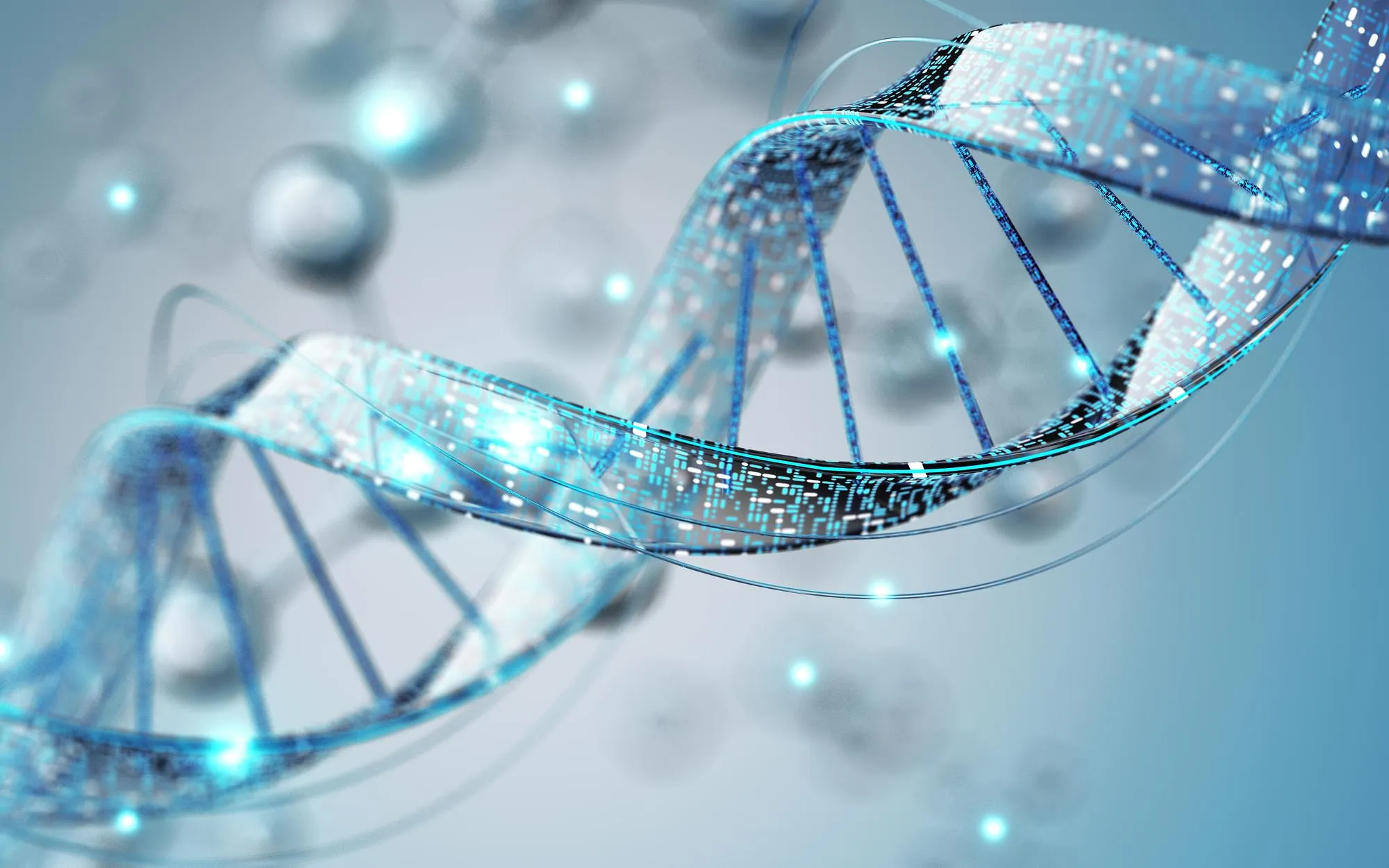
DNA is often explained as a codebook or set of instructions for producing proteins, and ultimately, life. Some stretches of DNA, called genes, code for proteins, but the vast majority of DNA is considered “noncoding.” Some of it has no known function, while other segments are critical to regulating gene activity.
These regulatory elements can interact in complicated ways, and their effects can vary across different cells and tissues. Some also influence genes located far away in the genome. Understanding how changes in DNA affect this regulation “is fundamental to understanding most disease,” says Carl de Boer, a genomicist at the University of British Columbia.
That’s why researchers are working to understand what every imaginable small variation in human DNA across the entire genome might mean for gene regulation. A recent AI tool built for that purpose from Google DeepMind, AlphaGenome, was originally announced in 2025. In January, a paper published in Nature provided more details, and the model was released for public noncommercial use. The AI model can compare an original DNA sequence with an altered one and predict how the change might affect gene expression and other regulatory activity. But researchers had to select the variants they wanted to test, write code, and run the computationally demanding model themselves.
Now DeepMind has done that work in advance for all 9 billion possible single-letter changes to a reference human genome. Today, on 8 September, DeepMind announced the creation and public release of the AlphaGenome Atlas , an online repository of precomputed predictions made using the AlphaGenome model.
Source link