

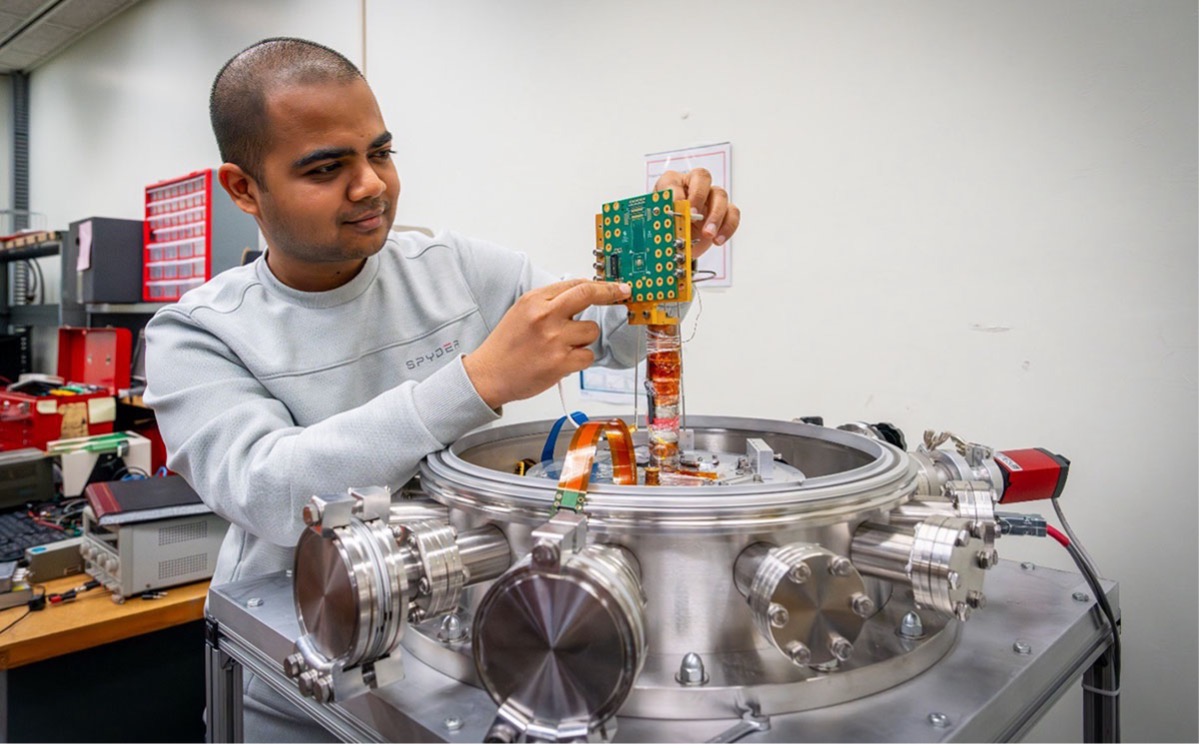
Orbital data centers, military/aerospace vehicles, HPC experiments, quantum, and advanced manufacturing equipment are all putting pressure on chips to withstand extreme environments.
Chips that were once qualified against a limited set of operating conditions are now being designed for environments where multiple stresses hit at once. Radiation, thermal shock, vibration, pressure, noise, and cryogenic temperatures are colliding in applications ranging from orbital data centers and defense systems to particle physics, quantum computing, and advanced manufacturing.
That is changing how chips are designed and qualified. AI-enabled design tools, machine learning, and language models can explore more design options earlier, but virtual models still have to be checked against physical behavior. For extreme-environment electronics, the challenge is not just predicting failure modes, but reproducing enough of the real operating environment to trust the prediction.
Space is becoming one of the clearest pressure points. The growth of satellite constellations, orbital data centers, space probes, surface explorers, and military space systems is increasing demand for radiation-hardened designs, including at newer process nodes where performance and power benefits must be balanced against survivability. That demand is already showing up in the design ecosystem.
“We have seen a major uptick in activity for rad-hard fab processes, particularly in the new process nodes to support orbital data centers,” said Dana Neustadter, senior director of product management at Synopsys . S. missile defense initiative).
Source link





