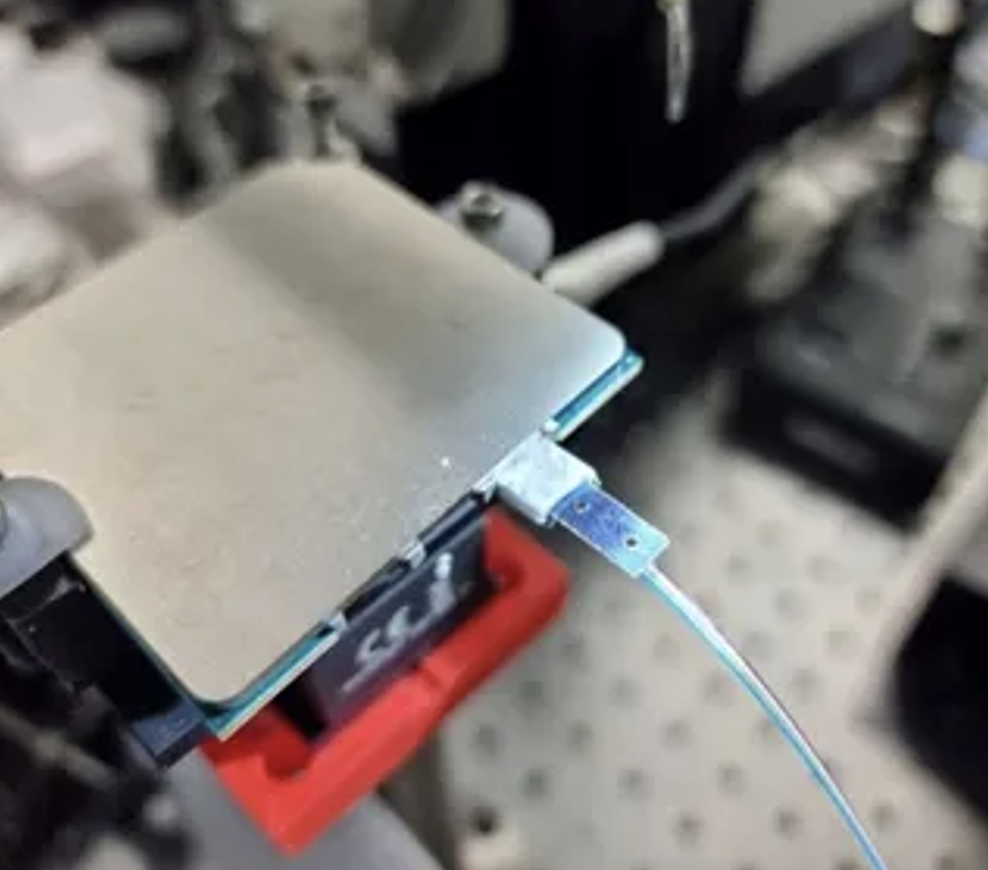
As photonics shifts from pluggable optical transceivers toward near- and co-packaged optics (NPO, CPO), engineers are devising new ways to attach fibers to the photonics chips on a board. Several different designs exist today, but so far there is no common interface.
With pluggable photonics, lasers and connections are attached at the server faceplate, with the board itself housing only electronic components. Yet long electrical connections to the faceplate mean higher power and longer latency. Fibers would need to move onto the interior of the board to solve that. That eliminates the need for pluggables, but it requires new solutions.
“With the rapid growth of generative AI, AI data centers are required to process enormous volumes of data faster and more efficiently than ever before,” said Yoshimasa Bando, principal scientist at Mitsubishi Chemical. “To meet this demand, further improvements in communication speed and energy efficiency have become critical challenges.”
The goal of CPO and NPO is to reduce reliance on long electrical connections.
Long lines
One reason for maintaining faceplate pluggables is that lasers are not always reliable. Using a pluggable module makes it easy to replace the laser.
“What we are focused on has the laser on the faceplate, because the laser is the highest reliability risk,” said Vishal Chandrasekar, director of product management at Ayar Labs.
All connections, whether they have a laser or not, happen in pluggable modules today. That means the signals those fibers carry must travel electrically from their origin to the edge of the board.
Source link