Our new distributed architecture helps to train LLMs across distant data centers - with lower bandwidth and more hardware resiliency.
Training a frontier AI model traditionally depends on a large, tightly coupled system in which identical chips must stay in near-perfect synchronization. This approach is highly effective for today’s state-of-the-art models, but as we look toward future generations of scale, maintaining this level of synchronization across thousands of chips becomes a significant logistical challenge.
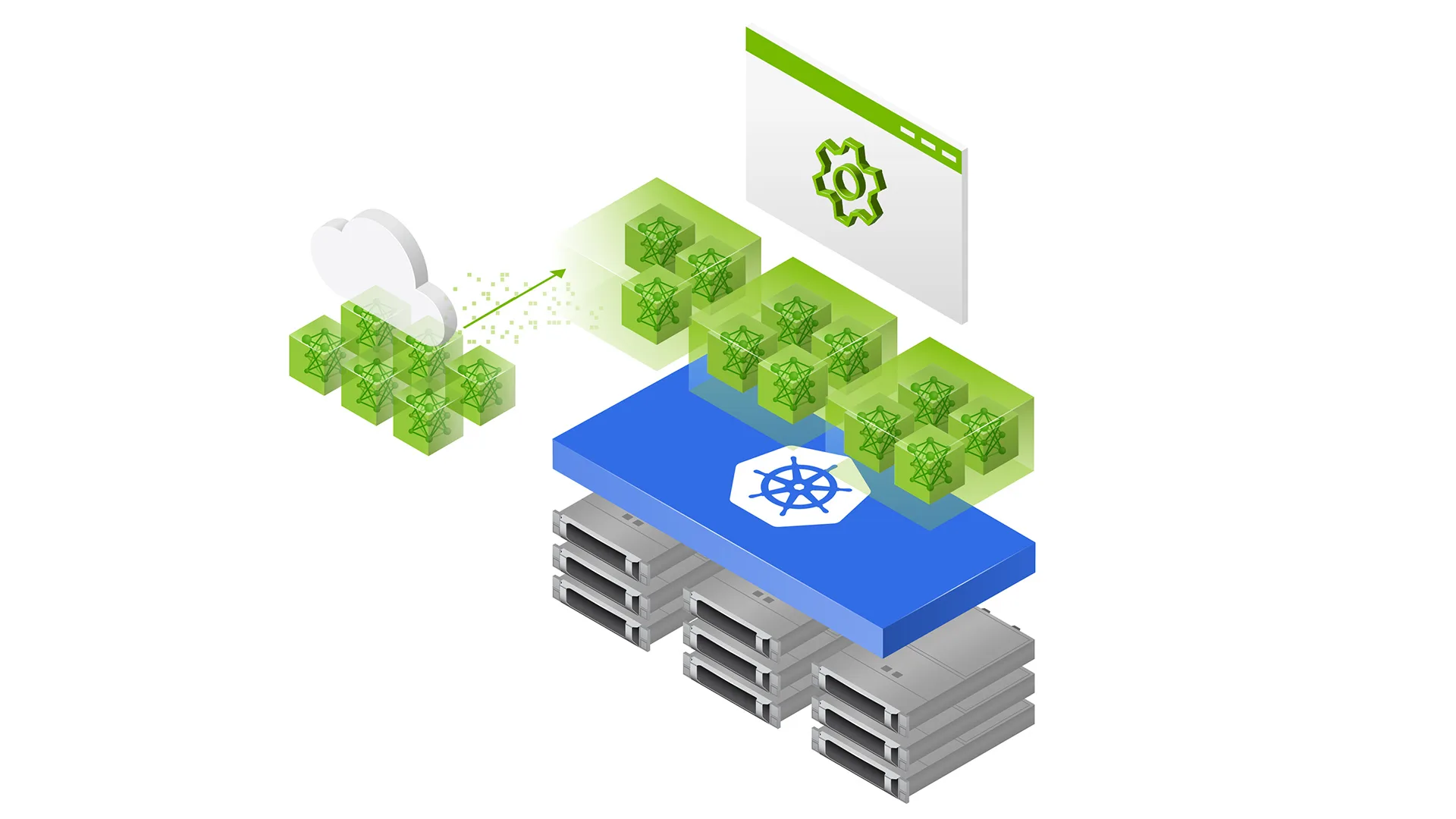
Today, in a new paper we are excited to share a new approach to this problem, called Decoupled DiLoCo (Distributed Low-Communication). By dividing large training runs across decoupled “islands” of compute, with asynchronous data flowing between them, this architecture isolates local disruptions so that other parts of the system can keep learning efficiently.
The result is a more resilient and flexible way to train advanced models across globally distributed data centers. And crucially, Decoupled DiLoCo does not suffer the communication delays that made previous distributed methods like Data-Parallel impractical at global scale.
As frontier models continue to grow in scale and complexity, we’re exploring diverse approaches to train models across more compute, locations and varied hardware.
Figure 1: Decoupling training runs into separate “islands” of compute (learner units) allows largely uninterrupted training despite the same level of hardware failures, because the effects of those failures are isolated.
Decoupled DiLoCo builds on two earlier advances: Pathways , which introduced a distributed AI system based on asynchronous data flow, and DiLoCo , which dramatically reduced the bandwidth required between distributed data centers, making it practical to train large language models across distant locations.
Source link