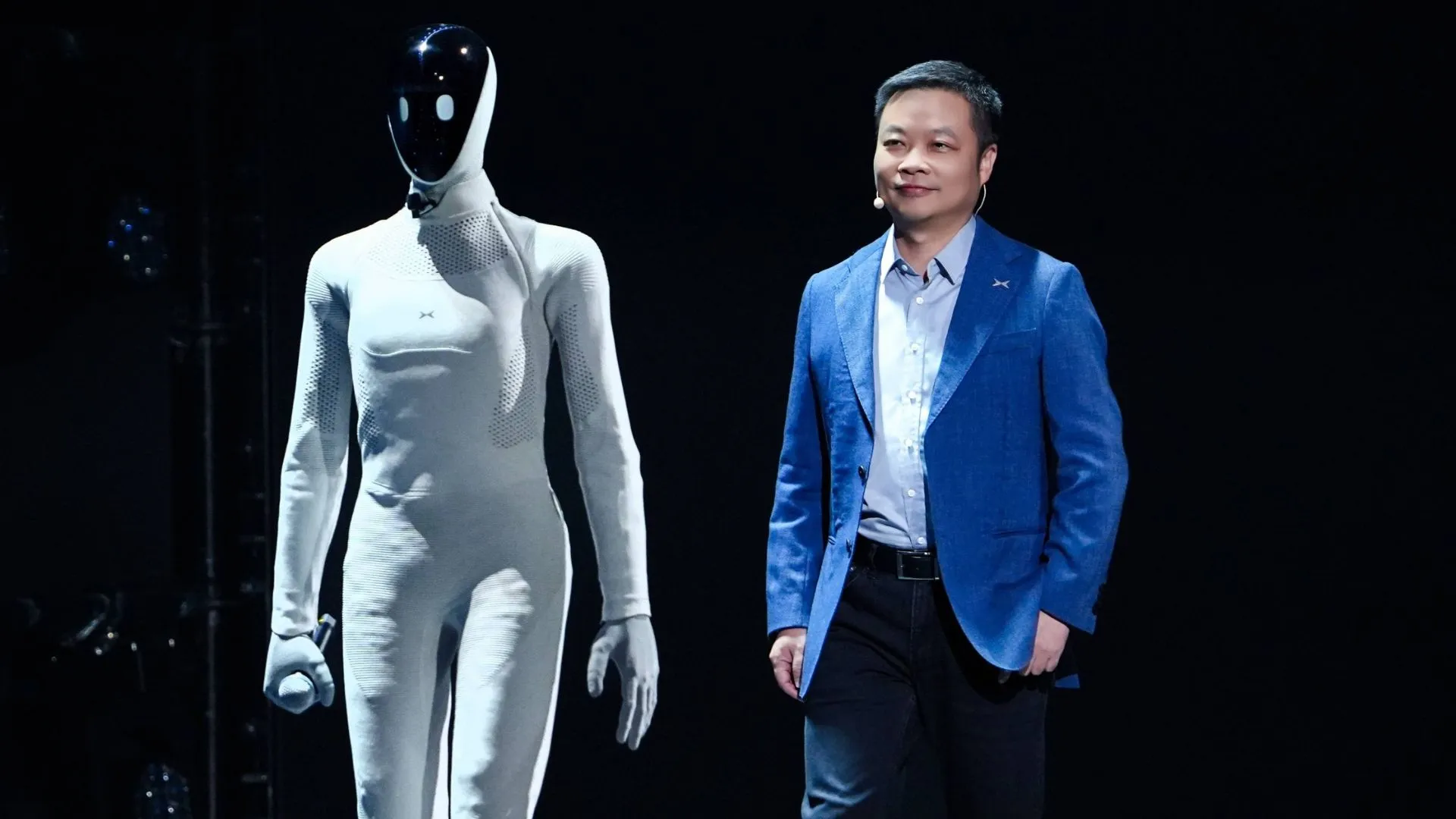
XPENG has unveiled a new physical-intelligence architecture and its IRON humanoid robot, outlining plans to bring the machine into its retail stores in 2027 as the Chinese automaker expands into robotics and autonomous mobility.
The company introduced its Turing Physical AI Architecture, also called VLA 3.0, at its eighth AI Day in Guangzhou on November 25. The framework connects AI models with computing, perception, control systems, and physical hardware across intelligent vehicles and humanoid robots.
XPENG said the architecture has three systems operating at different speeds. System 0 coordinates hardware functions, including power, energy, communication, and execution, while feeding information about the body’s state back into the AI loop.
System 1, powered by the company’s VLA 2.0 model, interprets the surrounding environment and translates it into real-time actions. System 2 handles higher-level cognition, using vision-language task planning and an agent runtime system to interpret objectives and coordinate complex tasks.
The company said the three layers create a feedback loop in which physical actions inform subsequent decisions. Its latest VLA 2.0 model, version 6.4.0, supports agent-driven closed-loop training, which XPENG said increases training speed by 10 to 12 times.
IRON, which made its first public appearance at the event, has 76 degrees of freedom and more than 1,500 tactile sensing points. XPENG said sensors cover more than 80 percent of key body areas, while three proprietary Turing AI chips support onboard models and whole-body control.
The robot combines multimodal understanding and task planning with navigation, manipulation, and safety monitoring. It can navigate autonomously, receive tasks through voice or app instructions, charge itself, and report abnormal conditions, according to the company.
Source link