By Members of Technical Staff: Aravind Srinivasan & Samay Shamdasani (Thrive Holdings), Arthur Fernandes Araujo & John de Wasseige (OpenAI)
How Thrive Holdings and OpenAI co-developed Tax AI for Crete accountants by fusing practitioner expertise with a Codex-driven loop
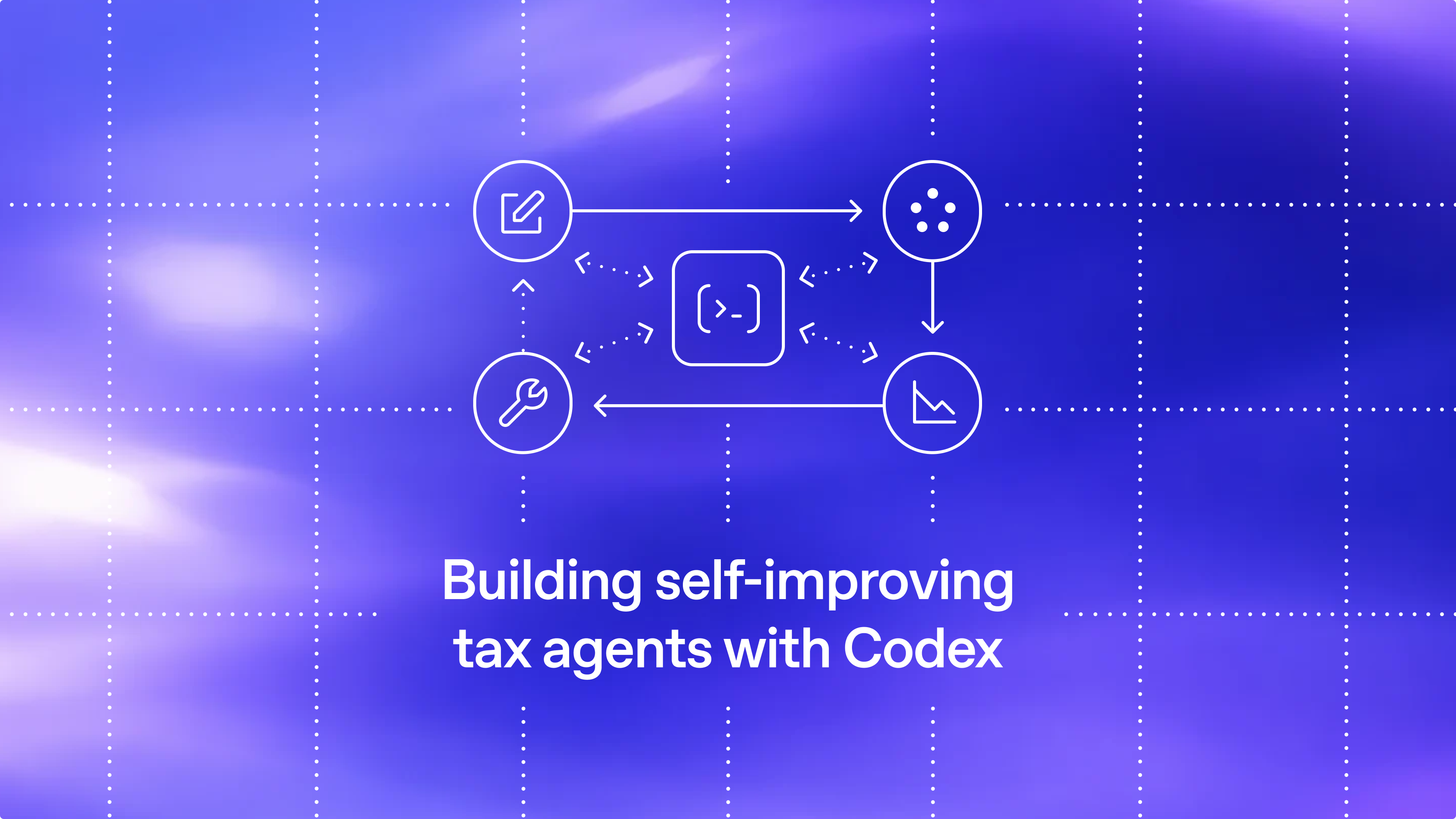
Real-world systems behave differently in production than they do in a lab, breaking in ways that are hard to anticipate before deployment. Teams often discover those failures after launch, then spend weeks inspecting edge cases, adjusting prompts, and translating production feedback into durable product improvements. The feedback loop is manual and slow, and only improves when an engineer advances it. But today, with thoughtfully designed eval infrastructure, direct access to practitioners and real world environments, and the frontier agentic capabilities of Codex, you can build agents that self-improve.
In this post, we’ll unpack how we used Codex to build this type of agent. Over the past six months, OpenAI forward deployed engineers and researchers along with Thrive Holdings’ engineers collaborated to build Tax AI alongside and for Crete(opens in a new window)’s network of 30+ accounting firms to help prepare increasingly complex tax returns. Instead of relying on engineers to find and fix each failure, Tax AI uses Codex to turn production use into structured signals that fuel autonomous improvement.
Crete practitioners prepare tens of thousands of tax returns each season which requires working through millions of underlying documents. For medium- to large-complexity filings, data entry alone can take eight hours per return, often involving messy data sources, prior-year documents, and manual extraction and calculation.
Source link