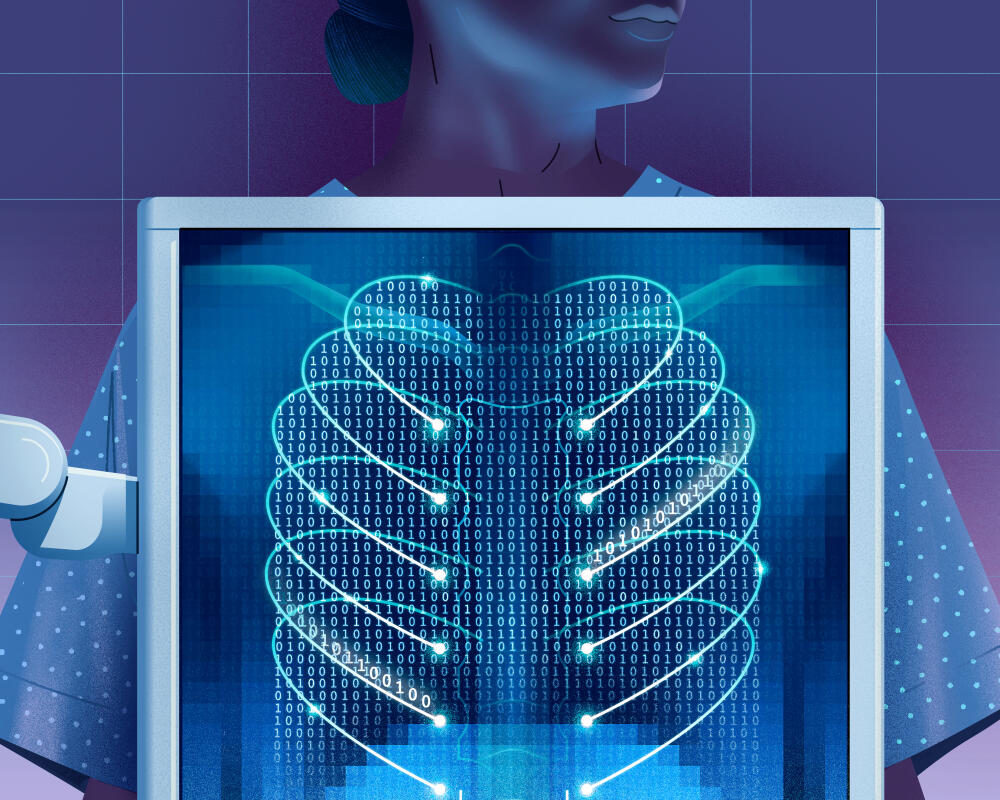
Alongside warnings about its ability to destroy humanity, artificial intelligence is also hailed for its potential to revolutionise health treatment. Just how far can it take us?
Her name was June. June would be the last month she ever knew.
I remember the way her bed made her so small, swallowed her up in the middle of the room, turned as it was to face the window. With her liver failing, her skin was a ghostly apricot. June – I called her Nan – had been stalked by the king of terrors, the emperor of all maladies: cancer. That son of a bitch.
The cancer was in her pancreas. Odds of survival? “Not good” – putting it lightly. The maths, putting it darkly: it’s the 12th most common cancer worldwide, the sixth most common cause of cancer death. The World Health Organization says it is “one of the cancer types with the least favourable prognosis”. It was not favourable for my grandmother.
June died nine years ago. Lately I’ve been thinking about alternate futures – the ones in which my grandmother, and the many millions diagnosed with cancer each year, are still here. The thoughts creep in as we are bombarded by artificial intelligence chief executives making bold proclamations such as “AI will cure cancer in five to 10 years” or “AI will cure cancer in our lifetimes” . Those claims stand in contrast to apocalyptic scenarios, including AI being responsible for human extinction before 2030. AI, we hear, is both saviour and annihilator.
Source link