This article has been reviewed according to Science X's editorial process and policies. Editors have highlighted the following attributes while ensuring the content's credibility:
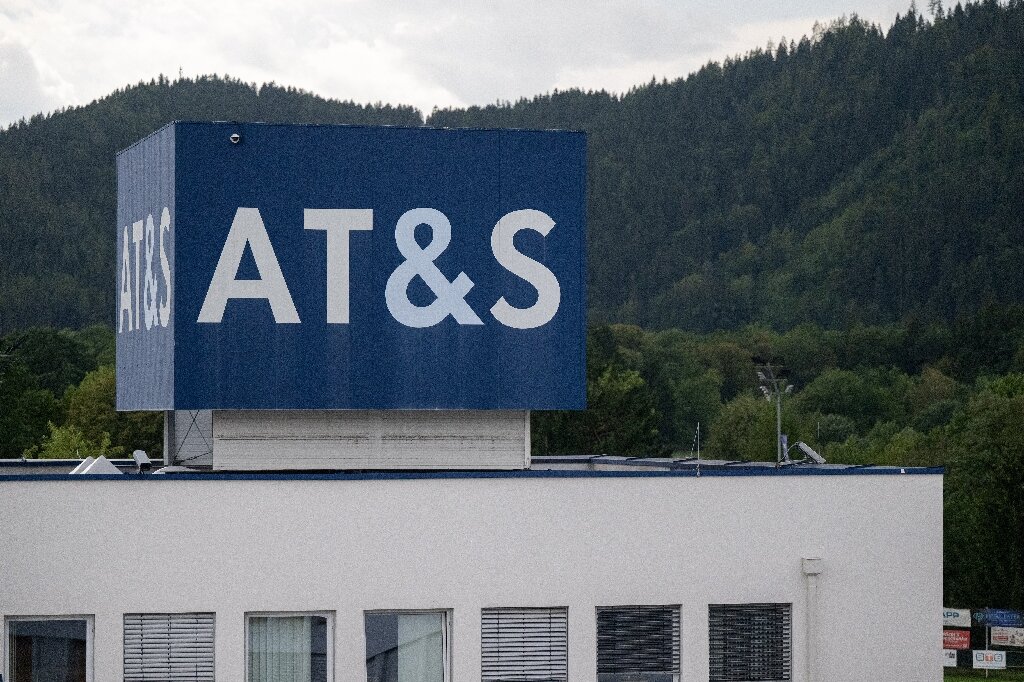
Nestled in the wooded hills of Austria's Styria region, the town of Leoben oozes tradition with its pastel-colored buildings and quaint central square boasting a 13th-century church.
But on the edge of town, engineers peer through giant magnifying glasses while robotic arms manipulate sheets of copper to develop components used in some of the world's most advanced AI systems.
AT&S, an electronics company based in Leoben, makes integrated circuit (IC) substrates, the boards that connect chips to computer memory and power supplies—a crucial component in the race to develop AI and high-speed data processing.
The company's shares have surged more than 450% this year, making it one of the most striking beneficiaries in Europe of the AI boom.
For chief executive Michael Mertin, this success shows that Europe can still "occupy important niches" in the AI race, even if it cannot compete with U.S. rivals on chip innovation or with Asian firms in terms of production scale.
"We will not be the leading nation or the leading region... (but) there are some outstanding technologies where we are world leaders in Europe," Mertin said.
Founded in 1987, AT&S initially made printed circuit boards before entering the IC substrate business in 2016, when it began serial production at a new plant in Chongqing, China.
The company opened a second factory to produce IC substrates in Malaysia in 2024.
Source link