Six months ago, while working on an internal productivity tool, our team made a controversial (at the time) decision: we’d build our repo with no human-written code. Every line in our project repository had to be generated by Codex.
To make that work, we redesigned our engineering workflow from the ground up. We built an agent-friendly repository, invested heavily in automated tests and guardrails, and treated Codex as a full-fledged teammate. We documented that journey in our previous blog post on harness engineering.
And it worked, but then we ran into the next bottleneck: context switching.
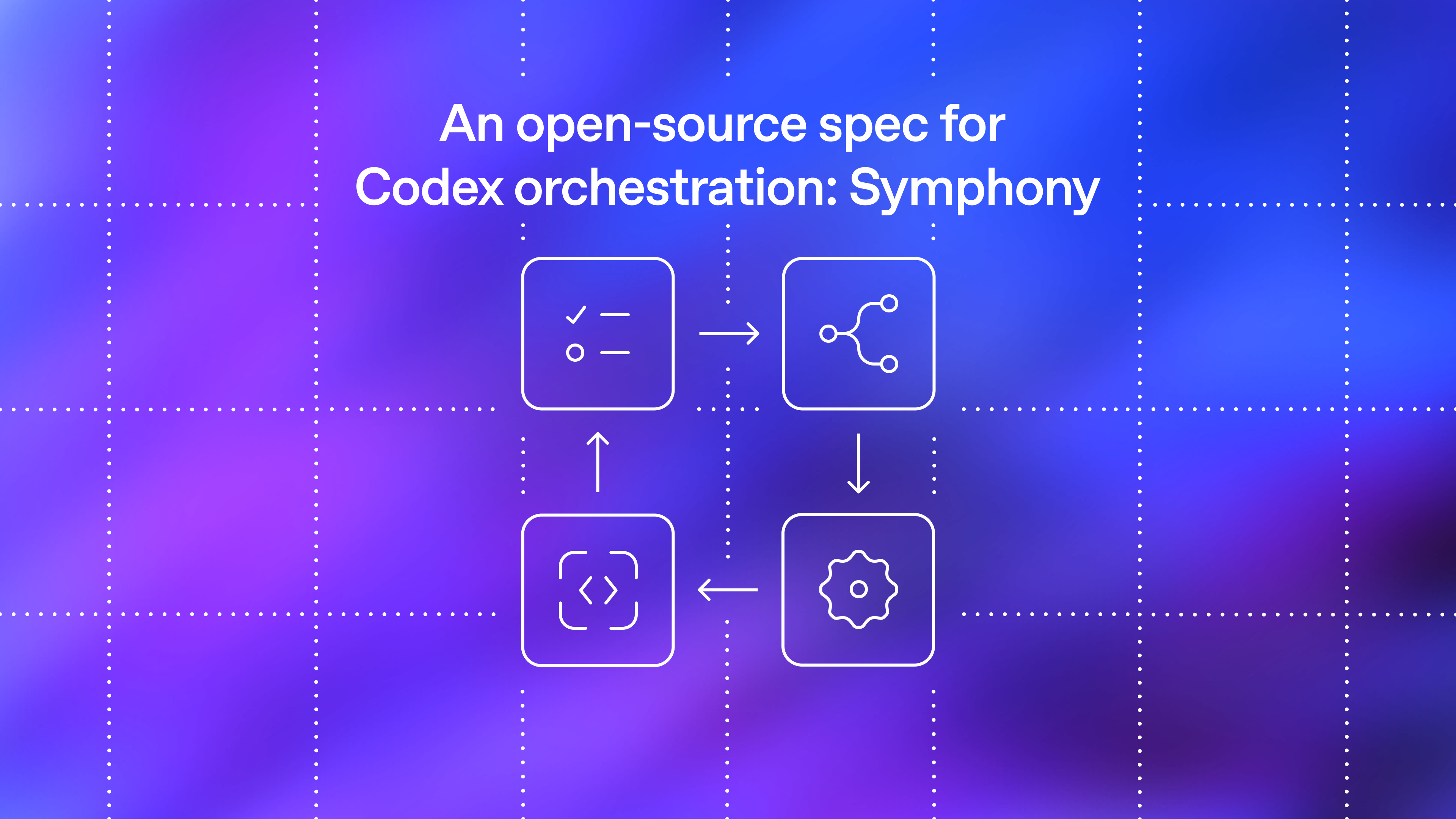
To solve this new problem, we built a system called Symphony. Symphony(opens in a new window) is an agent orchestrator that turns a project-management board like Linear into a control plane for coding agents. Every open task gets an agent, agents run continuously, and humans review the results.
This post explains how we created Symphony—resulting in a 500% increase in landed pull requests on some teams—and how to use it to turn your own issue tracker into an always-on agent orchestrator.
Even as they get easier to use, coding agents—whether accessed through web apps or CLI—are still interactive tools.
As the scale of agentic work increased at OpenAI, we found a new kind of burden. Each engineer would open a few Codex sessions, assign tasks, review the output, steer the agent, and repeat. In practice, most people could comfortably manage three to five sessions at a time before context switching became painful.
Source link