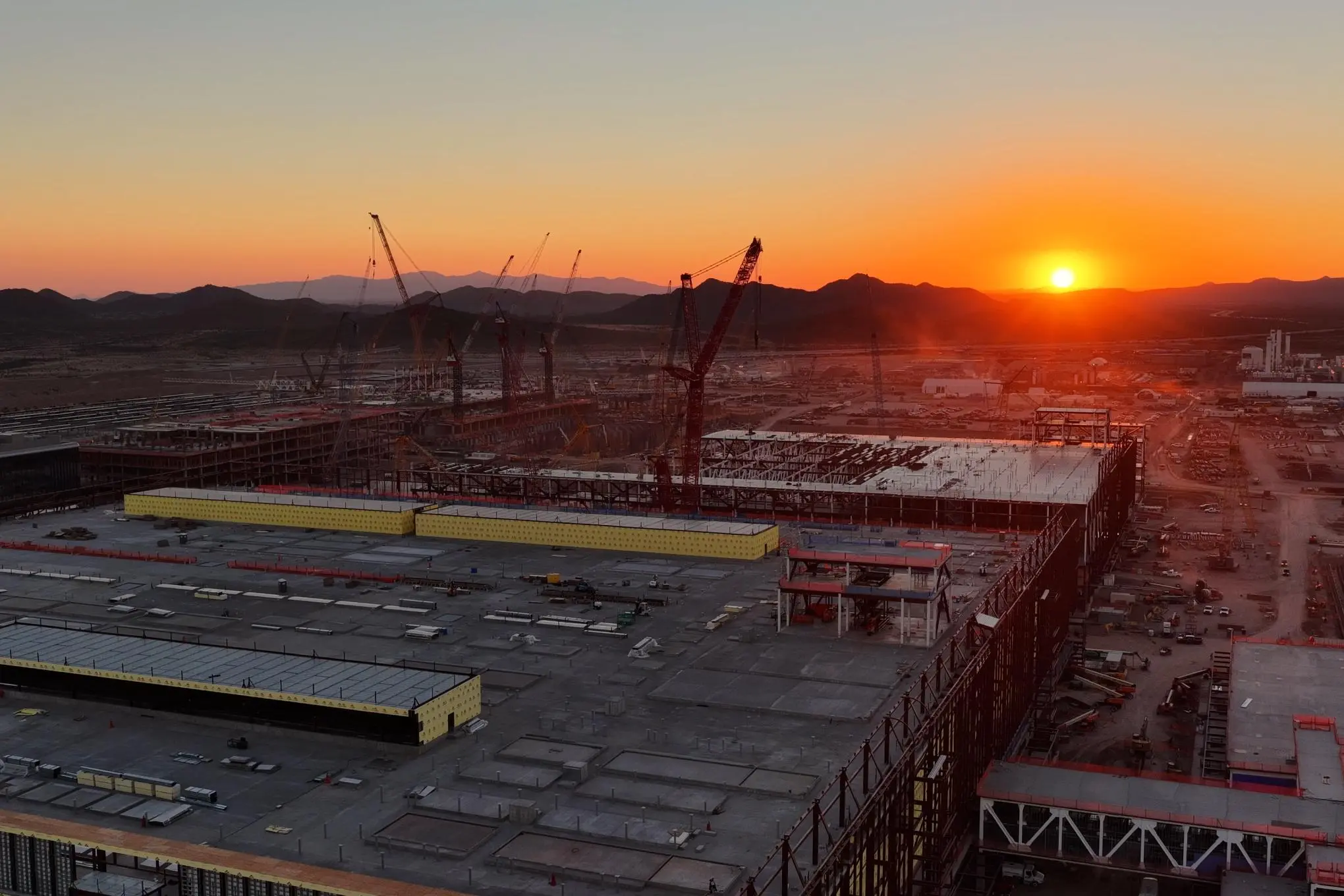
A hulking gray giant rises from the desert. Inside, engineers create the force behind our phones and computers and appliances, our streaming services and search engines and chatbots and vibe-coded apps and websites. The complex is simultaneously massive and squat, dwarfed by the mountains that surround it, and it is endless. I drive past one building, and then another, and then the ground opens up where construction crews have dug up the earth so a third building can rise. There is a parking lot, and then another, and then another. There is an empty lot on the other side of the street, full of cars and the occasional food truck to feed the thousands of laborers who are busy transforming this expanse of desert into an industrial park. There is dust, so much of it, choking the air.
I stand before the savior of Arizona’s economy. Like all great deities, it demands sacrifice. In the desert, nothing is more precious than water, and water is what must be given — nearly 5 million gallons a day, every day, sourced from Phoenix’s municipal supply. The offering has been well worth it.
All of this is the fruit of the Taiwan Semiconductor Manufacturing Company, the world’s leading producer of microchips. Its Arizona operation is the result of a pre-pandemic gamble Phoenix made to revive its sluggish economy, which never quite rebounded from the Great Recession. Now TSMC’s foundry looms over the city’s outskirts.
TSMC is a success story, one that some local leaders may have hoped to repeat with hyperscale data center developments.
Source link