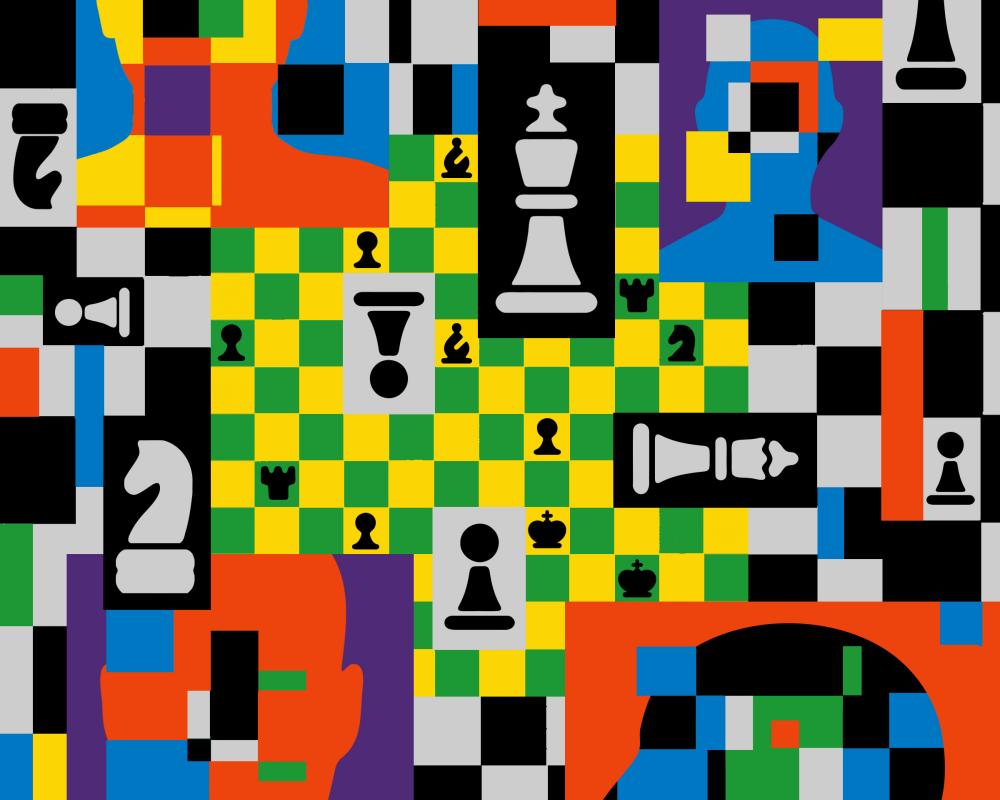
As two 20-year-old prodigies prepare to battle in the world chess championship, the game offers a surprising lesson about AI and what it cannot replicate
The upcoming world chess championship between Uzbekistan’s Javokhir Sindarov and India’s Gukesh Dommaraju in Geneva has all the makings of a barnburner.
Earlier this year, Sindarov, 20, won the Candidates Tournament as an outside longshot with a magnificent attacking style that overwhelmed the competition, locking up his title shot with a string of dazzling early wins.
His opponent Dommaraju, also 20, is the reigning champ. He’s hugely resilient under pressure, facing complications and crises with astonishing equanimity. Sindarov can blow people away and Gukesh is extremely hard to blow away. It’s a classic set up: irresistible force meets immoveable object. Both men are only 20 years old.
Play over the board will be only one aspect of the significance of the struggle in Geneva. A world chess championship is a kind of status report on intelligence itself, and human intelligence is in a state of radical flux. If you want to understand AI, what it changes and what it doesn’t, chess is the first place to look.
The world championship is also an opportunity for tens of millions of ordinary chess lovers, like myself, to realize, once again, just how much we suck at chess.
com hovers around 1,800. For some, that number might seem impressive – it puts me somewhere around the top 80,000 players on a site with 174 million members. For real chess players, that number is laughable.
Source link