
This article has been reviewed according to Science X's editorial process and policies. Editors have highlighted the following attributes while ensuring the content's credibility:
Science has increasingly used artificial intelligence (AI) as a kind of microscope—sorting data, analyzing images and revealing hidden patterns. Now a new shift is underway: AI that not only breaks down data but also helps scientists decide what to do next through simple, natural language requests.
With this emerging technology—agentic AI—scientists can ask questions and direct actions in everyday language. The system then helps perform or determine next steps, turning complex workflows into straightforward, chat-powered conversational exchanges.
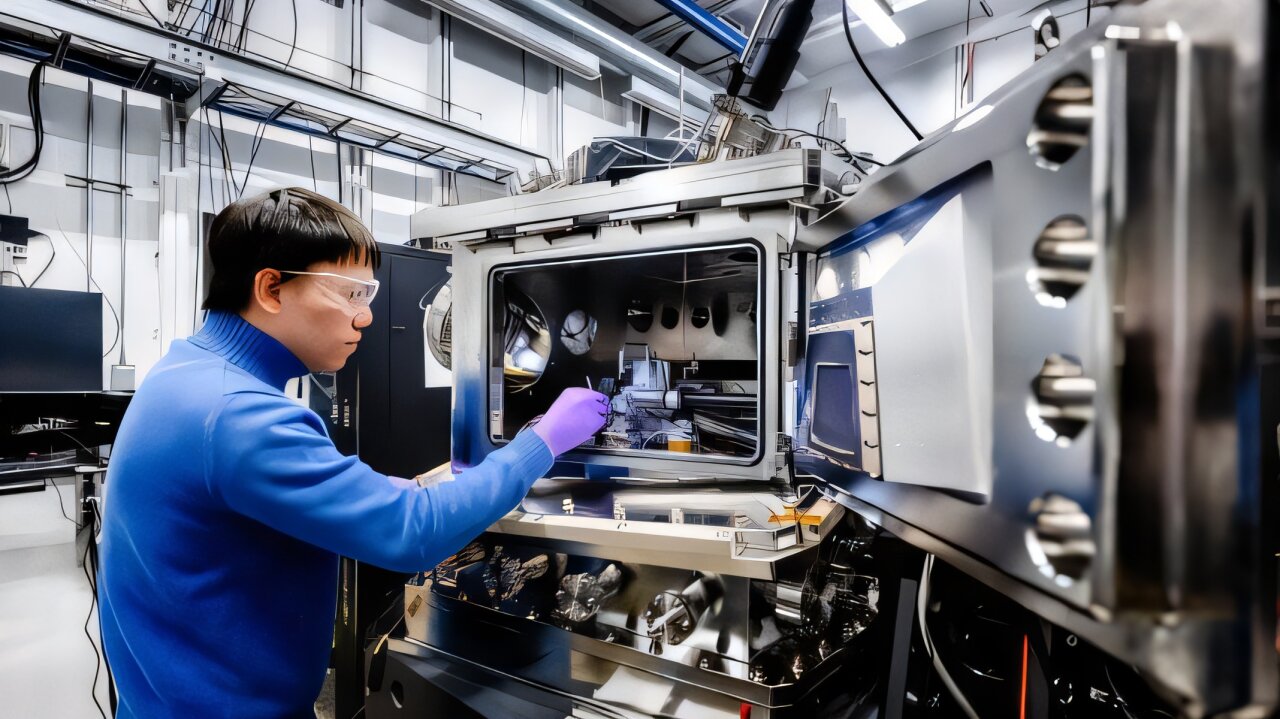
At the U.S. Department of Energy's (DOE) Argonne National Laboratory, researchers recently demonstrated this agentic AI capability as part of the Synergistic Neutron and Photon Science—Intelligence (SYNAPS-I) project, which integrates data from neutron, X-ray and microscopy experiments across national labs into a single effort.
SYNAPS-I is part of DOE's Genesis Mission, a national initiative to reinvent American science and innovation through AI. The project is led by DOE's Lawrence Berkeley National Laboratory (LBNL).
The first phase of SYNAPS-I showed that scientists could leverage fine-tuned foundational computing models to rapidly interpret the massive imaging datasets produced by modern X-ray experiments. This phase was successfully tested at Argonne's Advanced Photon Source (APS), the Argonne Leadership Computing Facility (ALCF), the Center for Nanoscale Materials (CNM) and several other DOE facilities earlier this year.
The APS, ALCF and CNM are DOE Office of Science user facilities.
The new SYNAPS-I phase adds an agentic AI layer that shifts the emphasis from data processing to experiment control.
Source link





