Caltech researchers have developed tiny, biodegradable robots that use near-infrared light to help medicines cross the blood–brain barrier, potentially improving treatment for brain cancer and neurological disorders.
Researchers at the California Institute of Technology (Caltech) have developed light-activated nanorobots that can carry drugs across the blood–brain barrier (BBB), a protective layer that prevents many medicines from reaching the brain.
Called BrainBots, the tiny robots delivered approximately five times more medication to the brain than nonactivated counterparts in experiments, according to the team. The findings could point toward new ways of treating brain tumors and neurological disorders that are difficult to address with conventional drug delivery.
Led by Wei Gao, professor of medical engineering at Caltech, the researchers published their findings online November 25 in Science Robotics. The study tested the technology in mice, meaning further research is needed before it can be evaluated in humans.
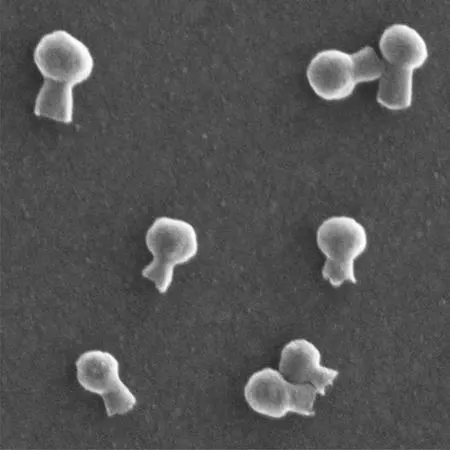
BrainBots are approximately 250 nanometers in size and are made from biocompatible, biodegradable materials. Each capsule contains ammonium bicarbonate, a gas-generating compound, inside a chamber sealed by a temperature-sensitive gate. The structure is attached to a drug payload and equipped with DNA molecules called aptamers.
After being injected into the bloodstream, the BrainBots are activated using near-infrared light directed through the skull toward the brain. The light generates localized heat, melting the temperature-sensitive gate and triggering gas production.
The resulting propulsion helps the nanorobots move toward cells lining the BBB. Their aptamers recognize and bind to these cells, allowing them to be taken up and transported across the barrier.
Source link