When fine-tuning or post-training LLMs, teams often do not have the time and/or budget to compare multiple configs even though that can significantly boost eval metrics. RapidFire AI lets you launch multiple TRL configs concurrently--even on a single GPU--and compare them in near real time via a new adaptive, chunk-based scheduling and execution scheme. In internal benchmarks referenced in the TRL page, this delivers ~16–24× higher experimentation throughput than sequentially comparing configs one after another, enabling you to reach much better metrics much faster.
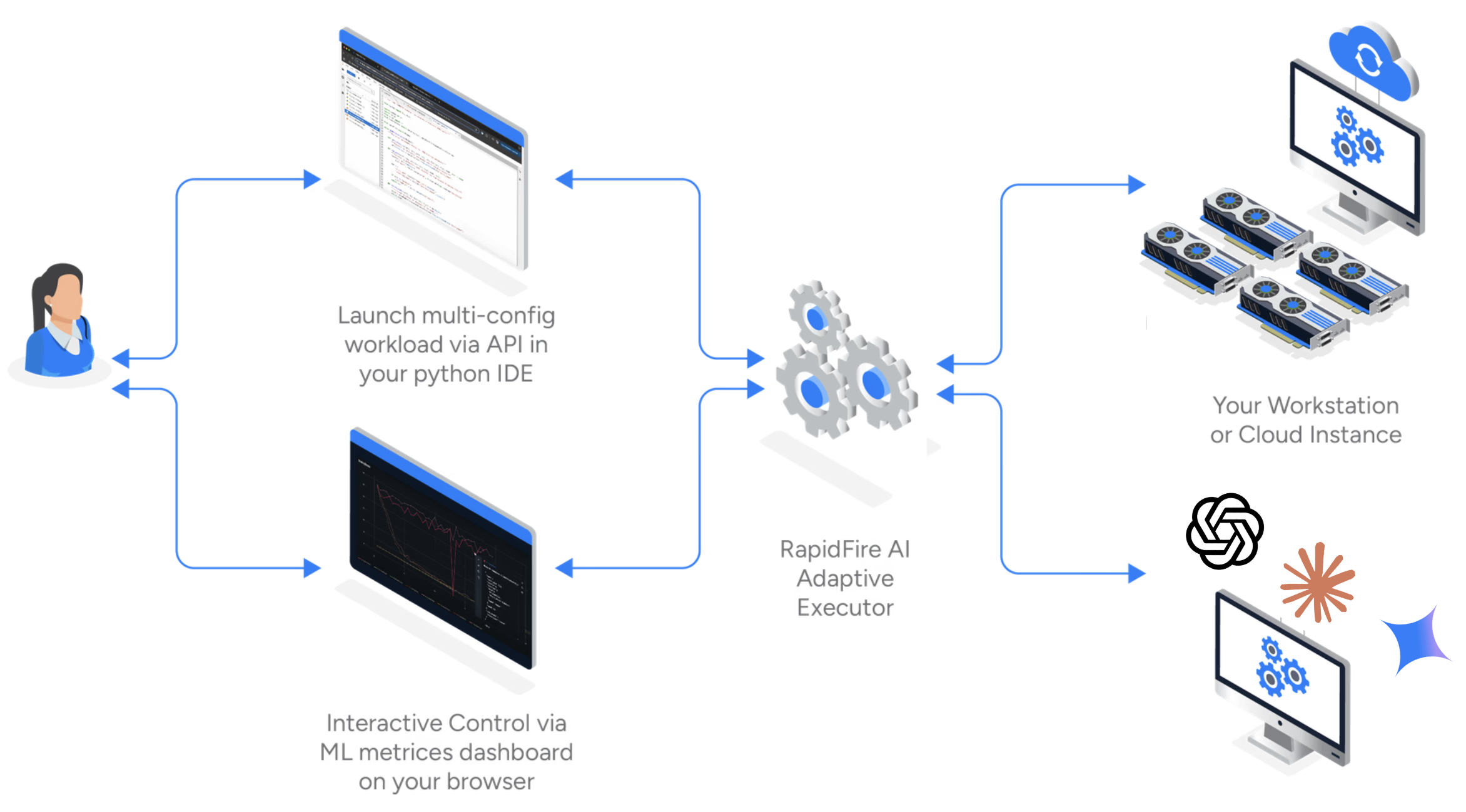 RapidFire AI establishes live three-way communication between your IDE, a metrics dashboard, and a multi-GPU execution backend
Drop-in TRL wrappers — Use RFSFTConfig, RFDPOConfig, and RFGRPOConfig as near-zero-code replacements for TRL's SFT/DPO/GRPO configs.
Adaptive chunk-based concurrent training — RapidFire AI shards the dataset into a given number of chunks and cycles configs at chunk boundaries to enable earlier apples-to-apples comparisons and also maximize GPU utilization.
Interactive Control Ops (IC Ops) — From the dashboard itself, you can Stop, Resume, Delete, and Clone-Modify, possibly with Warm-Start, any runs in flight to avoid wasting resources on underperforming configs and double-down on better performing configs--no job restarts, no juggling separate GPUs or clusters, no resource bloat.
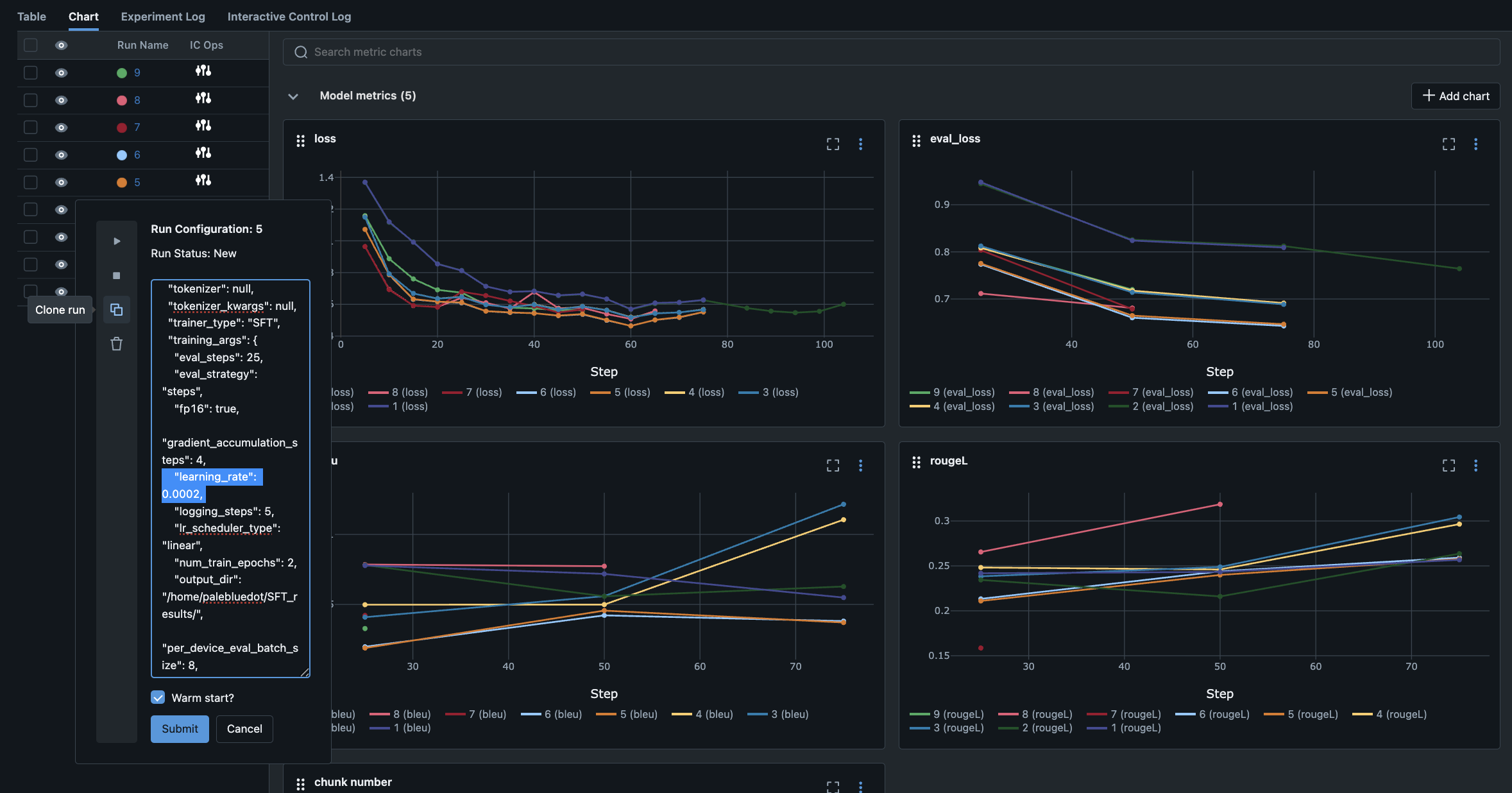 Clone promising configurations with modified hyperparameters, optionally warm-starting from the parent's weights, all from the live dashboard
Multi-GPU orchestration — The RapidFire AI scheduler automatically places and orchestrates configs across available GPUs on chunks of data via effcient shared-memory mechanisms. You focus on your models and eval metrics, not plumbing.
MLflow-based dashboard — Real-time metrics, logs, and IC Ops in one place as soon as you start your experiment.
Source link