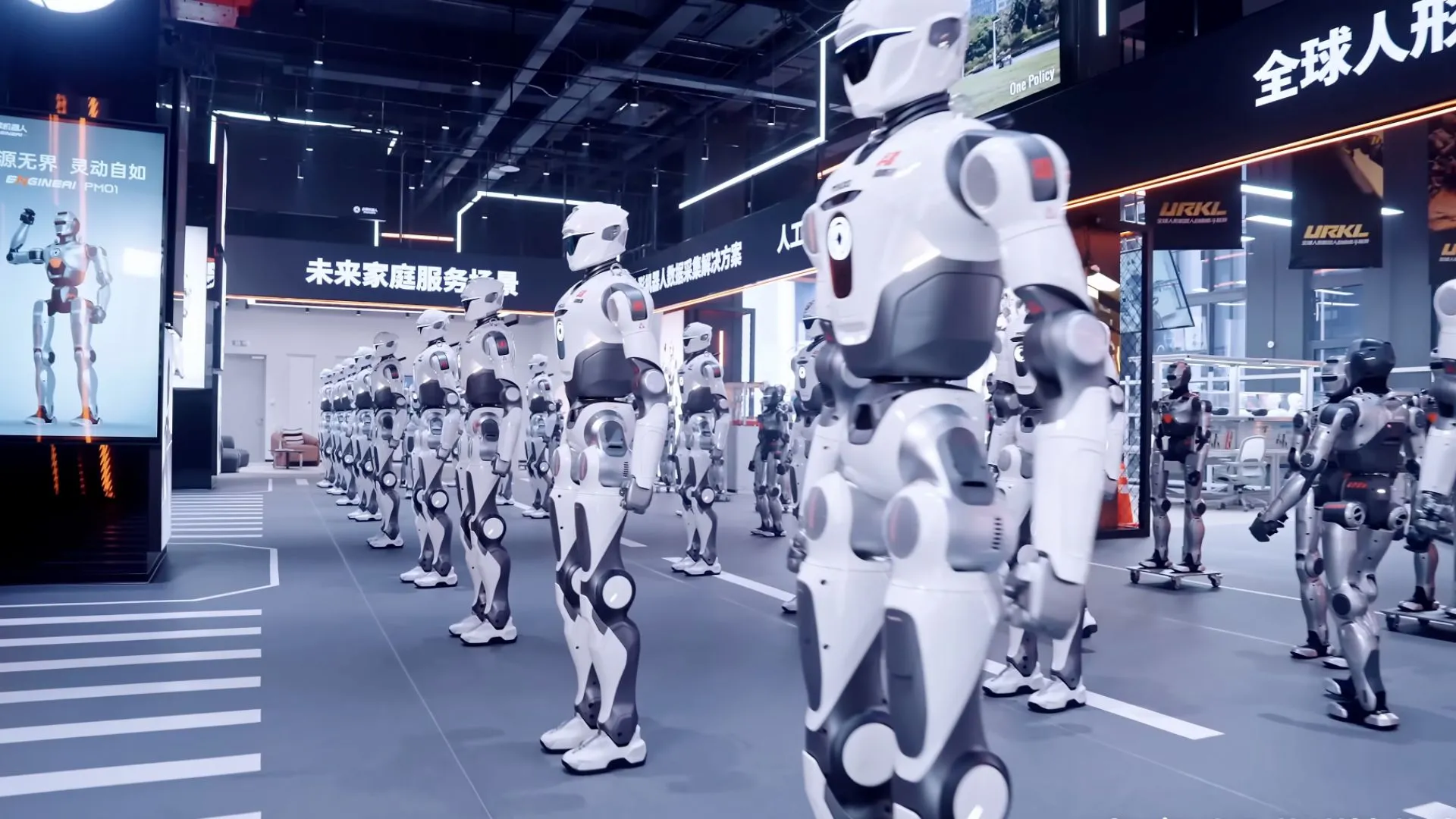
China has set a new Guinness World Record after 151 humanoid robots performed a synchronized dance routine in Shenzhen.
The record-setting performance took place on November 17, ahead of the Asia-Pacific Economic Cooperation (APEC) Economic Leaders’ Meeting scheduled for November 18–19 in the southern Chinese technology hub.
The robots completed the challenge for the most humanoid robots dancing simultaneously within one hour.
The event exceeded its initial target of 110 robots, with Guinness World Records adjudicator Xiong Wen announcing that all 151 machines had completed the performance.
The Shenzhen Longgang District Artificial Intelligence (Robotics) Bureau led the event and organized it with a robot 6S store, ENGINEAI Robotics Technology, and other robotics companies.
ENGINEAI’s full-size T800 humanoid robots played a key role in the demonstration, with 20 units showcasing the company’s swarm-control capabilities. Groups of Unitree G1 and AGIBOT X2 humanoids also participated in the performance.
The T800 is a full-size humanoid robot measuring 1.73 meters (5.7 feet) tall and weighing approximately 75 kilograms (165 pounds). According to ENGINEAI, the machine features a high-torque output of 450 newton-meters, allowing it to perform demanding movements that require considerable balance and joint strength. These include spinning kicks, rising dragon punches, kip-ups, and backflip landings, reports Gasgoo.
The robot’s ability to perform dynamic movements makes it suitable for demonstrations involving coordinated motion and physical agility. However, the Shenzhen performance also highlighted another important aspect of humanoid robotics: coordinating large numbers of machines to perform the same movements at the same time.
Synchronizing multiple humanoid robots requires coordination across their motion-control systems, joint movements, and timing.
Source link