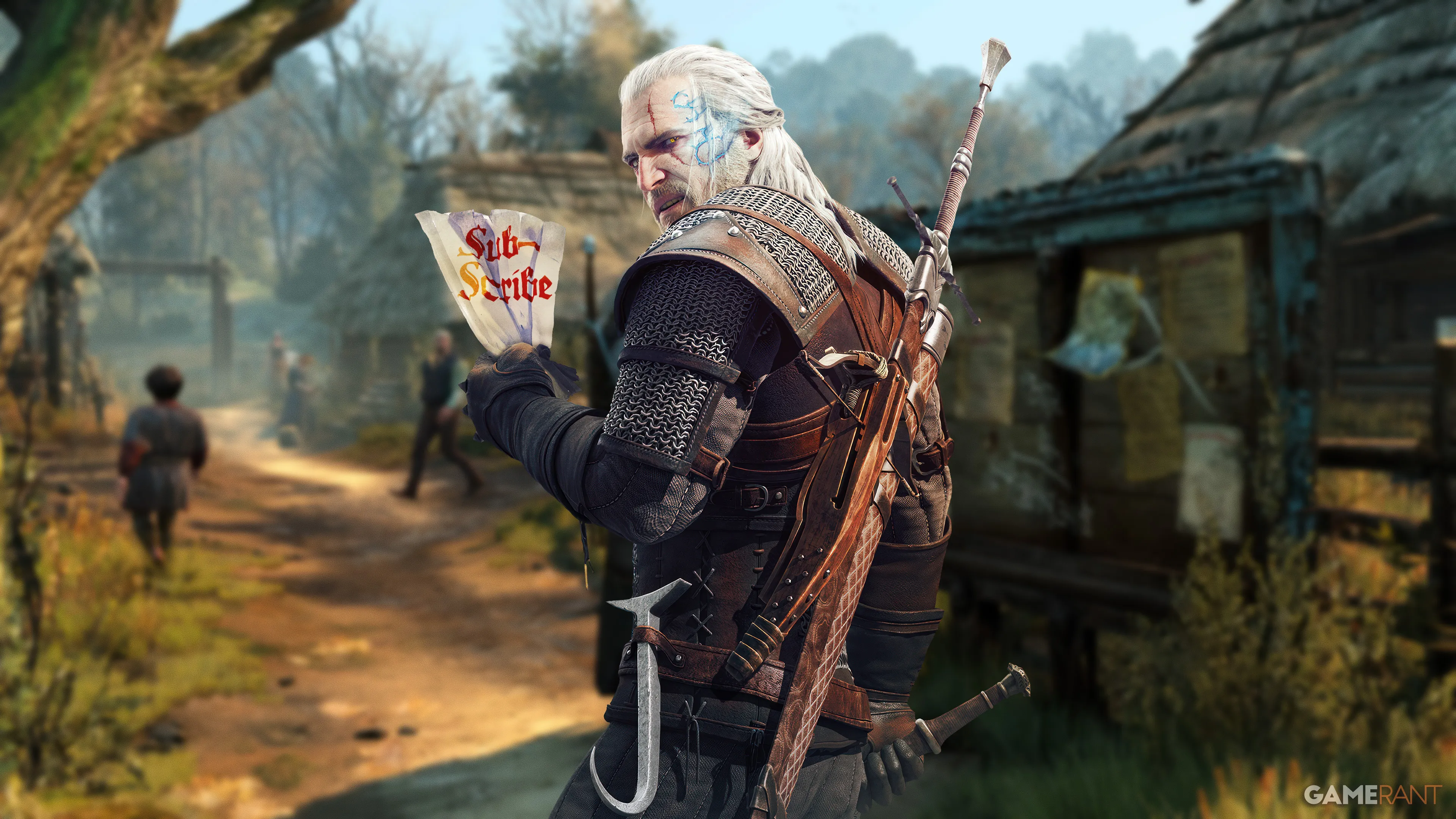
It's hard to think of a modern RPG that's more important and foundational than The Witcher 3: Wild Hunt, and its enduring legacy continues to prove that. While we might look back at a game like Far Cry 3 and identify it, even lovingly, as a product of its time, The Witcher 3 feels as timeless and relevant as ever, despite being over a decade old.
There are plenty of reasons for this, some more obvious than others. In the "more obvious" camp, we have The Witcher 3's undeniable quality. There are definitely RPGs out there with better combat, build-crafting, and exploration, but none that bring all of these elements together in such a consistently compelling way. There's The Witcher 3's writing as well, which is perhaps its single most revered aspect. The game's breadth, combined with some smart decisions from developer CD Projekt Red, has helped it achieve its unique flavor of longevity.
The recently announced Songs of the Past DLC for The Witcher 3: Wild Hunt won't be playable for a huge portion of the original game's audience.
Released in 2015 on the PS4, Xbox One, and PC, The Witcher 3: Wild Hunt followed the predictable trajectory of a successful AAA project. That is, it vacuumed up praise and accolades for several months, keeping the momentum going with a pair of exceptional expansions:
Both of these are widely and regularly hailed as the greatest video game DLCs of all time, with Blood and Wine in particular standing out as an ambitious, delightfully surprising chapter in CDPR's legacy.
Source link