Part of me feels like I have some sort of professional obligation to meet a game where it’s at and at least try to give it the benefit of the doubt in previews. But I also must speak my truth, and if I’m going to rake Crimson Desert over the coals for having some of the most obnoxiously obtuse video game controls I’ve ever experienced, I cannot in good conscience let Stranger Than Heaven get off scot-free.
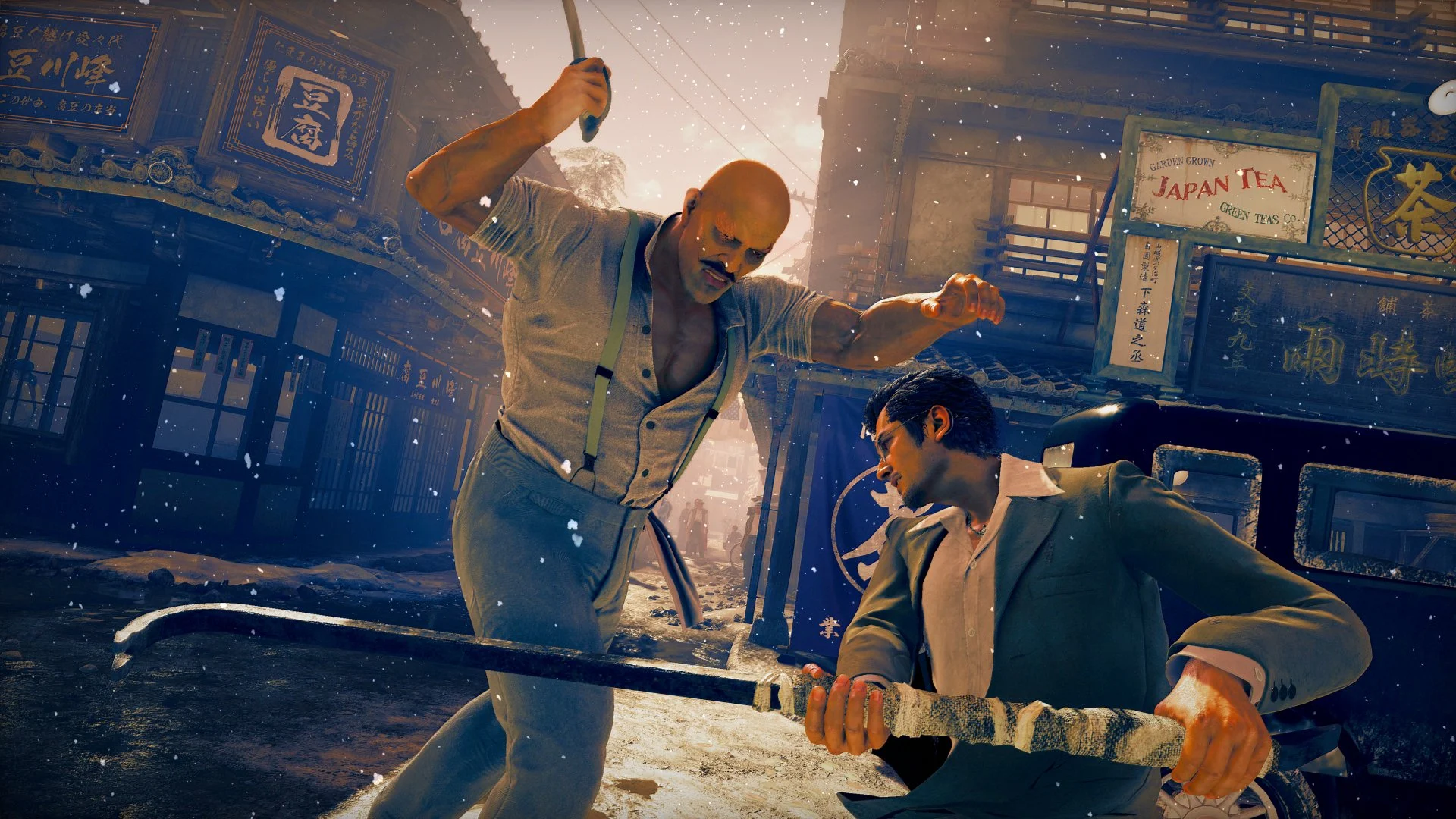
I was supposed to play Stranger Than Heaven at Summer Game Fest back in June, but scheduling issues had Moises Taveras cover it for Kotaku instead, and I think if I had been the one at that appointment two months ago, we would have run a very different preview for the Like a Dragon prequel. Moises seemed intrigued by the choices RGG Studio has made with Stranger Than Heaven’s combat, which trades the series’ usual beat-em-up stylings for an almost QWOP-like control scheme that has you controlling protagonist Makoto Daito’s left and right sides independently with the triggers and bumpers.
It sounds novel, and is meant to illustrate the weight of committing to shifting your body in the middle of a brawl, but in practice, Stranger Than Heaven deeply frustrates with how its slow-moving, clunky combat is so fixated on direction and character orientation that every time Daito is knocked aside or throws his weight around in an animation, the fight reorients itself. What was left is now right, the incoming attacks are suddenly being registered as coming from the side you weren’t originally blocking for, and Daito moves so slowly that by the time you have a sense of what direction the game thinks a punch or sword strike is coming from, it’s too late for you to react.
Source link