

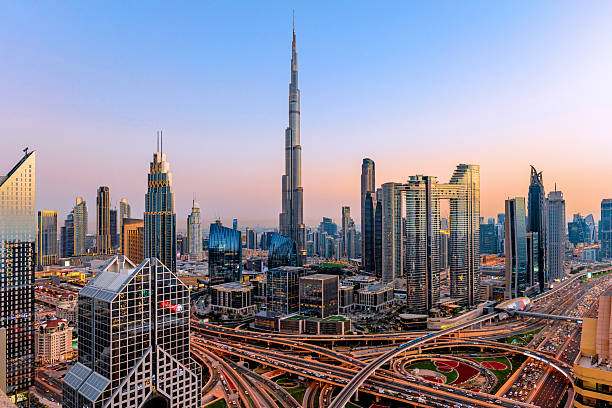
There was a time when the United Arab Emirates had to convince fintech companies to come. That is increasingly no longer the problem.
Dubai and Abu Dhabi now compete for international banks, hedge funds, cryptocurrency businesses, payment companies, family offices and fintech entrepreneurs. Digital banking has become normal, buy-now-pay-later (BNPL) is mainstream and the country is developing its own central bank digital currency.
The transformation has happened remarkably quickly. In 2024, the UAE could still reasonably be described as an emerging global fintech hub. By this year, the more interesting question is whether it is becoming one of the places where the next generation of financial infrastructure is actually built.
Oil and gas remain fundamental to the UAE economy, particularly in Abu Dhabi, but the country’s economic model has become considerably broader.
Trade, aviation, logistics, tourism, real estate, financial services and technology have transformed Dubai in particular into an international business centre, while Abu Dhabi has increasingly leveraged its enormous sovereign wealth to develop finance, technology and artificial intelligence.
The economic environment became more complicated during 2026 amid regional geopolitical disruption. The International Monetary Fund (IMF) nevertheless continues to highlight the strength of the UAE’s underlying economy and expects activity to rebound strongly in 2027 as hydrocarbon production and non-oil sectors recover.
This diversification matters for fintech because financial services are no longer simply supporting the UAE economy. They are becoming one of the industries the country wants to export.
The clearest evidence comes from the Dubai International Financial Centre (DIFC) .
Source link