Tesla’s Full Self-Driving v14.3.6 tried to take a highway exit that my car had already passed, at 110 km/h (68 mph), and it would have taken us straight into the ditch.
I was ready to take control, and I did, but it was scary. My girlfriend, sitting in the passenger seat, screamed in fear.
This was Sunday night on Autoroute 55 in Quebec’s Mauricie region, running FSD (Supervised) v14.3.6 — the latest and greatest Tesla FSD build on the latest hardware.
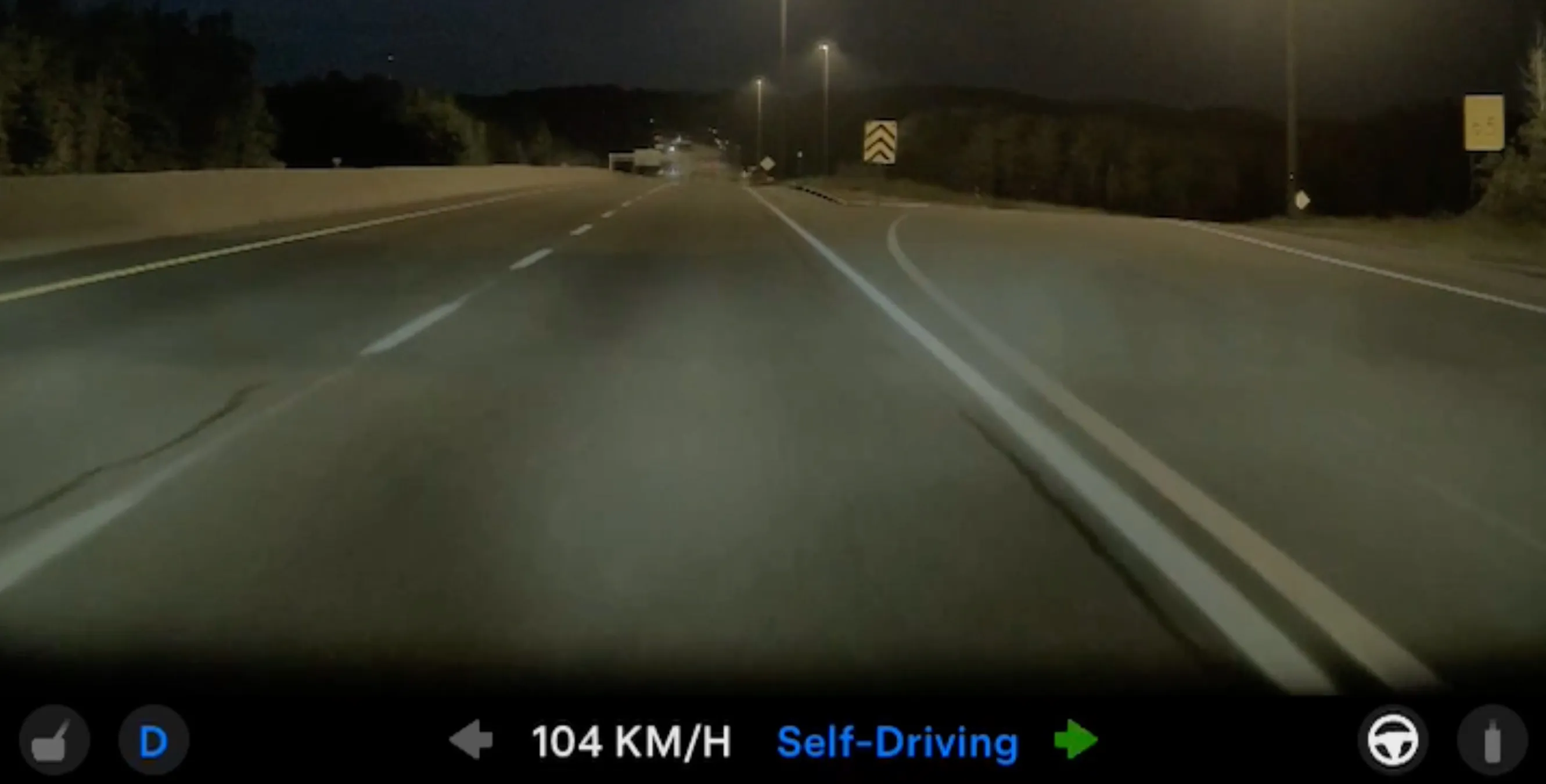
The car is cruising at 110 km/h in the right lane. Dry pavement, no traffic in either direction, fresh painted lines, reflective overhead signage. Perfect conditions for FSD. As we pass under the gantry for exit 217, the right turn signal comes on and the car starts pulling toward the shoulder, still showing “Self-Driving” on the screen.
The problem is that the ramp was already peeling off behind us. It was going to drive us straight into the ditch by turning this late at that speed.
The speed readout goes 110, 109, 107, 104 as it commits to the maneuver. That’s when I grabbed the wheel. “Self-Driving” drops off the display at 102 km/h.
This wasn’t a lane-position wobble or a moment of hesitation. The car decided to put its blinker on and take an exit it had no business taking
If you were designing the easiest possible scenario for Tesla’s system, this was it.
Divided highway. Night, so oncoming headlights and lane reflectors are easy to pick out.
Source link