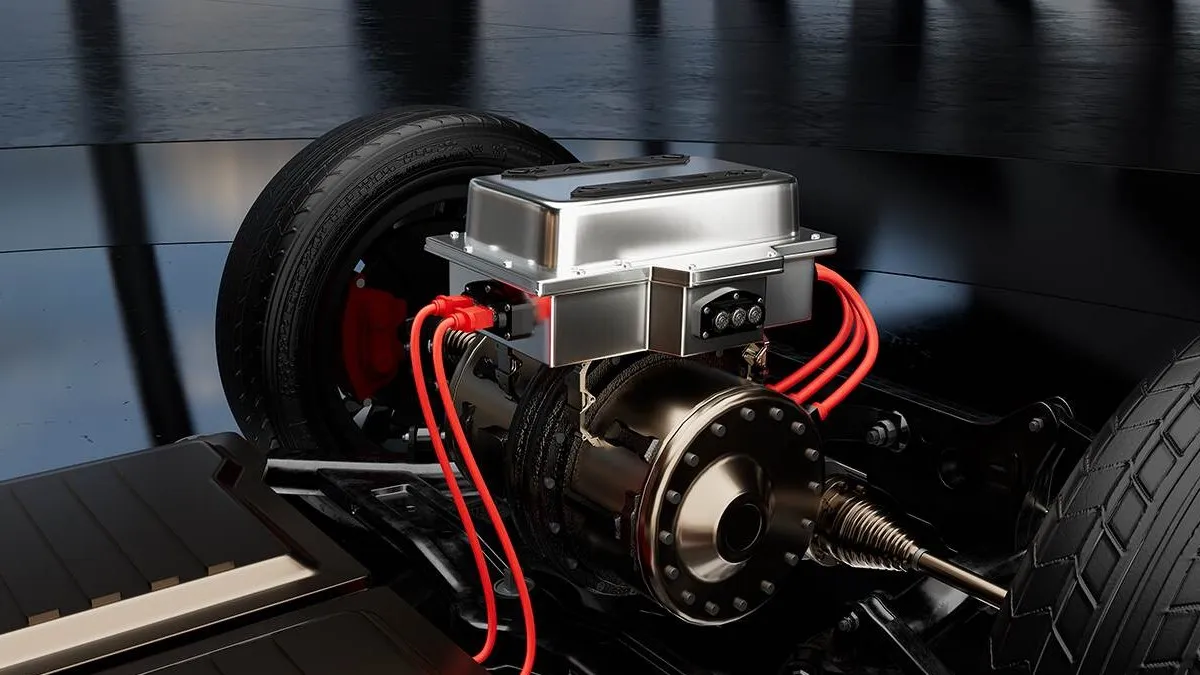
A tiny new sensor from Texas Instruments (TI) could help future EVs squeeze more range from their batteries while delivering smoother acceleration and less motor noise.
TI’s new TMCS2100-Q1 sensor is designed for the traction inverter – the part of an EV that controls how electricity moves from the battery to the motor. Think of the inverter as the motor’s power manager: It needs to know exactly how much electricity is flowing so it can deliver the right amount of power at the right moment.
The more accurate that measurement is, the more precisely the EV can control its motor. That matters to drivers because sloppy measurements can cause tiny fluctuations in power, known as torque ripple. Drivers may experience that as less-smooth acceleration, while the EV can lose some energy as extra heat and motor noise.
Existing sensors force automakers to make a compromise. Sensors with a magnetic core are accurate, but they’re larger and heavier. Smaller sensors without a core take up less space, but vibration can throw off their readings as the car moves.
TI’s new sensor is compact and designed to be accurate. Instead of measuring the magnetic field around the electrical current in just one direction, it measures it horizontally and vertically at the same time. That allows it to compensate when vibration shifts the sensor slightly out of position.
TI says that makes the TMCS2100-Q1 20 times more accurate than current single-direction coreless sensors. 4 millimeters.
Source link