The viability of orbital data centers hosting the largest and most capable large language models (LLMs) remains hotly contested. But enormous deployments that require thousands of GPUs aren’t the only way LLMs might prove useful in space.
NASA’s Jet Propulsion Laboratory recently sent Google’s Gemma 3 to space, achieving the first in-orbit demonstration of a vision-language model analyzing imagery from a satellite’s own sensor.
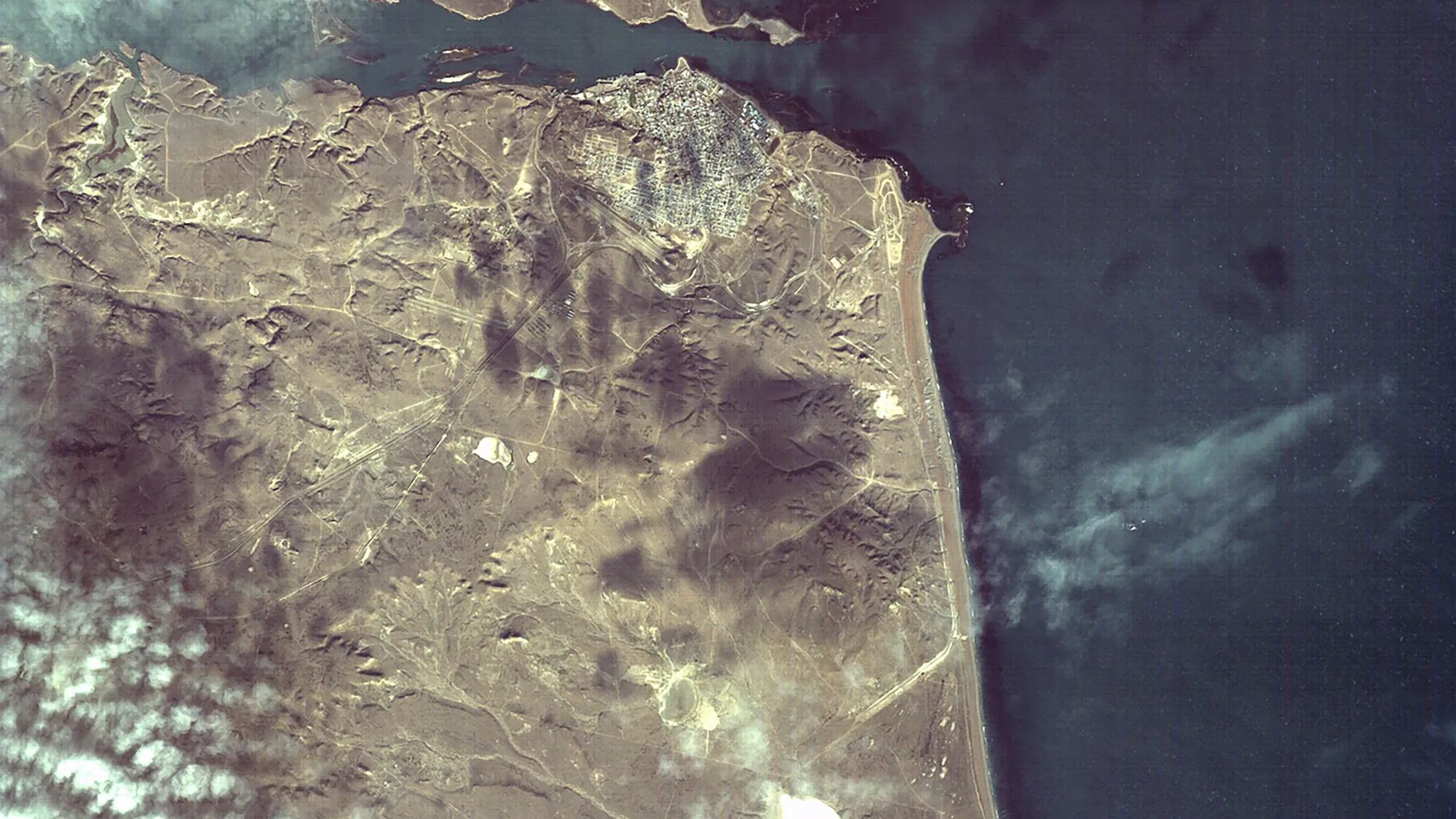
The system, known as NAVI-Orbital, used Gemma 3 to analyze images captured by a YAM-9 satellite built by Loft Orbital. Juan M. Delfa, technical group lead at NASA, said that though the goal in this case was image analysis, the project’s success implies a fundamentally new way researchers on the ground can interact with spacecraft.
“This is a major shift,” said Delfa. “Now, a scientist can write a prompt, upload it to the spacecraft, and that will be taken into account by the system. It’s different from previous paradigms, where researchers have to write very structured commands that require an operations team and process.”
At its core, NAVI-Orbital is an agentic software framework developed by Delfa and his coauthors, Taran Cyriac John, an AI researcher at NASA JPL, and Andrew W. Herson, a tech lead at Loft Orbital. It coordinates operations with a LangGraph-based conductor and deploys a compressed, 4-bit format of Google’s Gemma 3 4B, an open-weights LLM, to produce plain-text image descriptions.
NAVI-Orbital was 88 percent accurate when used to classify images in a benchmark dataset of 7,960 images.
Source link