
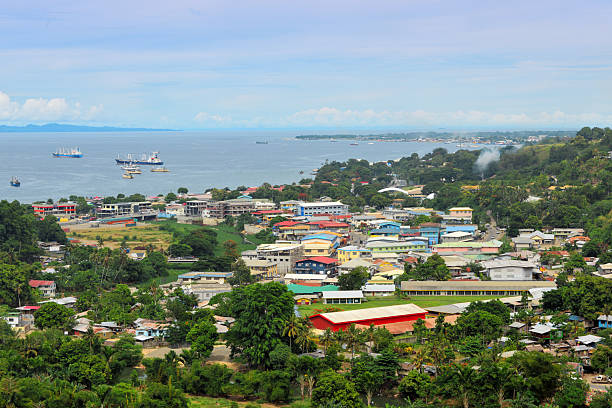
In the Solomon Islands, getting to a bank can sometimes mean getting into a boat. That simple reality explains more about the country’s fintech opportunity than almost any statistic.
Spread across nearly 1,000 islands in the South Pacific, the Solomon Islands presents financial institutions with an extraordinary logistical challenge. Building bank branches, maintaining ATMs and transporting physical cash between communities is expensive when customers are dispersed across hundreds of islands and vast stretches of ocean.
For many Solomon Islanders, therefore, fintech is not about making an already convenient financial system slightly faster.
It is about accessing one in the first place. Mobile money, real-time payment infrastructure and QR codes are beginning to offer an alternative. A basic mobile telephone can potentially connect someone living far beyond Honiara with financial services that previously required substantial travel. In 2026, that transition is gathering momentum.
The Solomon Islands economy remains heavily dependent on natural resources and public expenditure. Logging has historically been particularly important, alongside fisheries, agriculture, mining, construction and tourism.
Honiara, on Guadalcanal, is the country’s commercial and financial centre. Major financial institutions include Bank South Pacific (BSP), ANZ and Pan Oceanic Bank.
The International Monetary Fund (IMF) expects the economy to grow by approximately 2.6 per cent this year, with nominal gross domestic product (GDP) reaching around $1.88billion.
Longer-term economic challenges remain considerable. The IMF has highlighted declining logging production, infrastructure constraints, vulnerability to climate change and the need to create employment for a young and growing population.
Source link