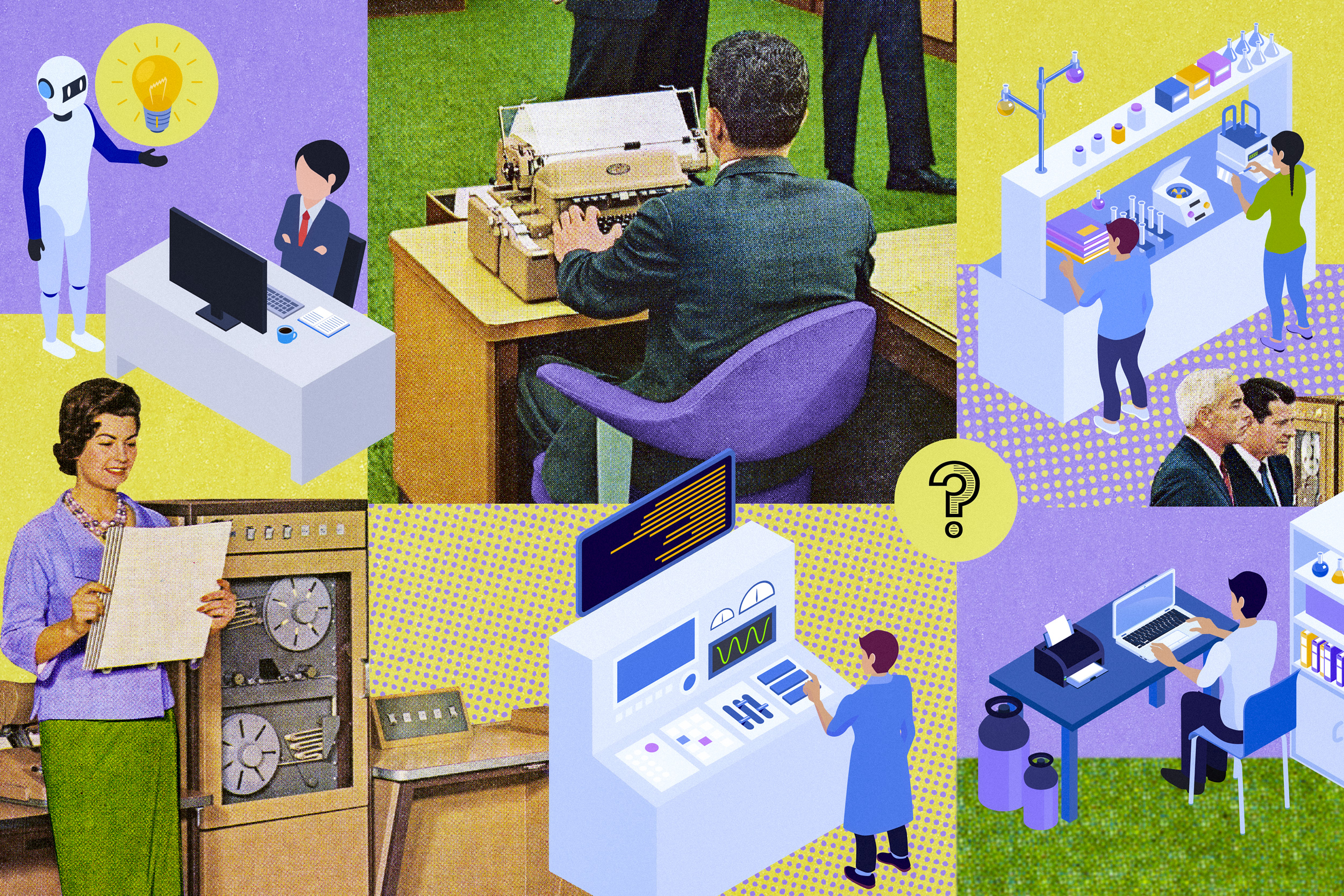
The AI boom has disrupted the way engineers work, introducing new tools to learn, raising expectations for what teams can achieve in a workday, and making it harder to get hired in the first place. This makes it difficult to advise students on which specific coding languages or technical skills they should learn. So amidst the uncertainty, advice for young professionals often turns to a common refrain: Be adaptable. But what does adaptability look like in practice?
Engineers often operate on the cutting edge of technology, so dealing with change is a normal part of the job, says Samantha Brunhaver, an associate professor of engineering at Arizona State University, in Tempe. Yet university curricula and training in the workplace often don’t prepare students for this.
“We tell engineers that they need to be adaptable when they graduate, but we don’t actually explain what that means, demonstrate what that looks like, [or] help make sure that they’re developing it,” says Brunhaver, who received a National Science Foundation award in 2020 to study how to foster greater workplace adaptability among young engineers. For this ongoing project, she has interviewed engineering managers, early career employees, and undergraduates about their experiences.
Part of the problem, she says, is that every employer has its own idea of what to be adaptable means. ” But the skill is context-dependent. In software engineering, that might mean responding to turnover in the tools you use on a daily basis, while aerospace or biomedical engineers may need to keep track of changing procedures and regulations.
Source link